Part IV · THE YEAR THE FAMILY BROKE APART · Chapter 13
The Four Hundred Dollars
Los Angeles, and a farm near Tulsa · 1946
In the record Galen Vane Krewson (1897–1957) · Margery Knight Marshall (1922–1979) · Félice Marshall Mitchell (née Knight) · Marvel Krewson · Alfred George Marshall (1888–1973) · Rose Caroline Huff · Katherine M. Kibby (née Marshall) · Rev. George Thomas Marshall (1853–1938) · Al Krewson (b. 1943) · Glenn Krewson (b. 1943) · Marjorie Krewson · Rosie Krewson
In 1946 a woman named Félice Mitchell — "Granny" to the four children in this chapter — came from England to Los Angeles to see her daughter, and found her, in the words her grandson would quote sixty years later, "married with 4 babies on her hands." She was, in her own words, "shocked and horrified beyond words" [1].
Everything in this chapter comes from one man's memory, written down once. Al Krewson — one of the four babies, three years old in 1946 — sat at a keyboard in Portland, Oregon, on the morning of 21 January 2005, sixty-two years old, and wrote his nephew Michael two long emails in a row about the year his family came apart, in answer to a question about who his father was. He had pieced it together, he said, "from several talks we had during my growing up years in Ireland" with the grandmother who took him there, from two cousins who had known his father, and from what a three-year-old keeps. He sent the second email by accident before he had finished it, and then finished it. At the end he wrote: "I will assure you what I shared is as accurate as I can make it based on information given to me first hand. You may consider this as a piece of family history and you should perhaps keep it for your records" [1]. This is the record he asked for.
Granny
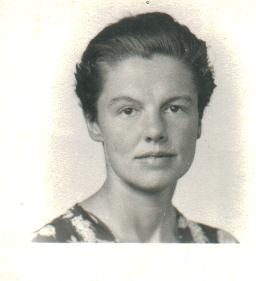
She had been born Félice Knight, in Belgium — French was her first language, English her second, "which answers an age old question I had of her knowing French before she did English" [2] — and had married an English research chemist, Alfred George Marshall, and borne him a daughter, Margery, at 62 Foxley Lane, Purley, Surrey, on 21 April 1922 [3]. The marriage ended in divorce; she married again, a British Army major with a Military Cross from the Boer War and an estate in the mountains of central Ireland, and the grandchildren would know that man as Grandpa; he has his own chapter. She was, Al said, "a real globetrotter," fluent in French and Spanish, and she carried, and passed to him, a story that the family descended from Ferdinand and Isabella — "we most certainly have royal blood in us (though we are very distant from it now)" [2]. That is family legend, and the book leaves it labelled so.
Granny told Al she had graduated with honours from Cambridge, and that Grandpa had been at Oxford; and that the family's blood ran back through her to the Spanish crown. None of it is documented in the family's hands, and Al passed it on as told.
Al Krewson to Michael, 26 June 2002 [2].One of the three has since been documented, and it is the one about the man who fetched the children home. On 11 September 2026 a relative on the Knight side sent Michael a newspaper page: the San Francisco Examiner of Tuesday 23 October 1973, page 50, under the headline "A. Marshall, oil executive."
Funeral services for Alfred George Marshall, retired Shell Oil Company executive, will be held at 2:30 p.m. tomorrow in St. Clement's Episcopal Church, Claremont Boulevard at Russell Street, Berkeley. Mr. Marshall died in Berkeley Sunday at age 85. He was a native of New Zealand where he was granted a Rhodes scholarship in 1911. During World War I he served as a captain, royal engineers, with the British Expeditionary Forces. Surviving are two daughters, Mrs. Katherine M. Kibby of Berkeley and Mrs. Margery M. Kresen of Los Angeles, four grandchildren and three great grandchildren, as well as brothers and sisters in New Zealand.
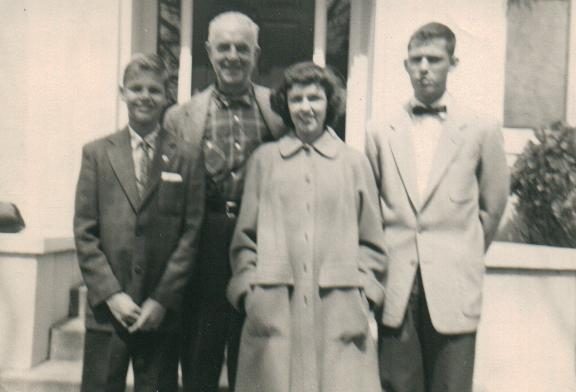
San Francisco Examiner, 23 October 1973, p. 50 [6].A Rhodes Scholar goes to Oxford. The University of Otago keeps the public roll of New Zealand's Rhodes Scholars, and the 1911 line reads Alfred George Marshall — Auckland — Balliol, between Kenneth Sisam in 1910 and Alan Wallace in 1912 [6]. So the research chemist of 62 Foxley Lane was a New Zealander, born at Dargaville on the Kaipara in March 1888 by a relative's reckoning [7], a Balliol man, a captain of Royal Engineers in the First World War, and by 1946 a Shell Oil executive in Berkeley — which is how a man in California came to have a car and the means to drive to Tulsa for his daughter and four grandchildren. He died on Sunday 21 October 1973, aged eighty-five. "Mrs. Margery M. Kresen" is the newspaper's misprint of Krewson. "Four grandchildren" is exactly the four of this chapter; "three great grandchildren," in October 1973, includes a two-year-old in Haverhill, Massachusetts. And "Mrs. Katherine M. Kibby of Berkeley" is a great-aunt the family's record had never held — almost certainly the "Aunt Kay" who stands beside Grandpa Marshall and a fourteen-year-old Al in the photograph of about 1957, with "Uncle Bill" her husband. Granny said Grandpa had been at Oxford. He had.
Later the same night Michael exported the Ancestry tree he had been keeping, and its gallery held the New Zealand papers [8]. In 1910 a Dunedin photographer posed "the three candidates for the Rhodes Scholarship" against a weatherboard wall — Smith of Wellington, Ongley of Otago, "and A. G. Marshall (University College, Auckland), the successful candidate." In August 1914 a Port Chalmers paper reported that "the Rev. G. T. Marshall, of Port Chalmers, has received a letter from his son, who was Rhodes scholar for 1911 and was in Oxford when the war broke out, stating that he has enlisted in the British Army, and is received as a corporal in the Royal Engineers to act as despatch rider and motor cyclist … The letter is dated August 14." The Press Association, when he came home on leave in December 1931 "after an absence of 21 years": he "went to France with the first reinforcements of the English Regular Army, qualifying as one of the 'Old Contemptibles.' He later secured a commission and served at Gallipoli until the evacuation, after which he served in Egypt and Mesopotamia till the end of the war" — and afterwards, at Oxford and in Sussex, did the research "in conjunction with Mr. H. Ricardo, a prominent engine designer" that gave petrol its knock rating, before Shell sent him to California in 1928 [8]. So the research chemist was a vicar's son, an Old Contemptible, a Gallipoli captain, and a colleague of Ricardo and Tizard; the family knew none of it.
One more thing about the company, since this is a book about a Dutch family. Shell is Dutch. The group Alfred Marshall spent his working life in was made in February 1907 by amalgamating the Royal Dutch Petroleum Company with the Shell Transport and Trading Company of London, on terms that gave the Dutch side sixty per cent of it and the British side forty; the scallop on its tankers and filling stations is a pecten, and the pecten is the reason the smaller partner was called Shell at all [11]. There is nothing in that but a coincidence, and it is set down here as one. The man who drove to Oklahoma in 1946 to fetch four Krewson children home was a New Zealander, was no blood relation to any of them, and had married into this family and out of it again before a single one of them was born. He simply happened to spend his career working for a Dutch house, while the four children asleep in the back of his car were the tenth American generation of a different one.
And the tree corrected the book on one thing that matters to this chapter. Alfred's second wife was Rose Caroline Huff, married at Paddington after 6 November 1926, and the note on his card reads: "They had one child Katherine (Mrs Kibby), though they raised Margery born 1922 to Felicie" [8]. Katherine Kibby was Rose's daughter, Margery's half-sister; and Margery did not "somehow" get to California — she was raised there. The 1930 census has her at eight in her father's house at Martinez, "Daughter"; she had arrived in 1928, at six. In December 1931 the Auckland Star has Mr. Marshall "accompanied by Mrs. Marshall and their two children" arriving from San Francisco by the Monowai for Christmas with his parents, and "returning to the States on January 12 by the Aorangi" — which is the Honolulu arrival of 21 January 1932 in Margery's naturalization file [8]. At nine she spent Christmas in Auckland with grandparents her own children never heard of. She was naturalized at Los Angeles on 27 February 1948, the year of the bell-tent.
Her daughter Margery had been in California since she was six, in her father's house — the inference the book first made here, that her father was the route from Purley to Los Angeles, turned out to understate it — and had married a machinist fifteen years older than herself named Galen Vane Krewson, who had come out of Iowa in the thirties for reasons the last chapter set out, and had two wives behind him that his cousins knew of [4]. They married at Yuma, Arizona, in 1942 — the county seat across the state line where Californians went for a same-day licence — on a date three sources give three ways: New Year's Day on a relative's tree, 10 May on the family event on Michael's, and 22 May in Margery's own naturalization file, which is the document and wins [7] [8]. By 1946 she was twenty-four and had four small children: Al, born 2 February 1943; Glenn, born 21 December of the same year, ten and a half months later; and two girls — Margery Felice, called Marjorie, born 1 December 1944, and Rose Marie, called Rosie, born 20 March 1946, five weeks before Granny arrived — dates the family's record did not hold until Michael's tree supplied them [8]. Galen "was holding a steady job as a mechanic in Los Angeles and taking care of his family (us 4 and Mom)" — that is Al's own summary, and the cousins who had known Galen in Iowa agreed with it: he "was trying his best to settle down with his family (us) in LA" [1]. "Then Granny showed up on the scene and all hell broke loose."
What she thought of him
Al did not soften what his grandmother said, because she had not softened it to him:
…as far as our dad was concerned, she "despised him for being so thoughtless in having her make so many babies in so short a time, thereby proving himself to be irresponsible both as a father and husband…" and on and on and on it went. She would tell me things in Ireland about him, and in her words "she absolutely despised him and made no two bones about it to him."
Al Krewson to Michael, 21 January 2005, 11:01 a.m. [1].And then the money:
She told me of a time when he convinced her he was going to buy a farm for all of us to live on in Oklahoma, but he needed $400 for a down payment, which she loaned him. He promptly disappeared with the money and went around the bars back east (Oklahoma) drinking it all away while bragging how he took his mother-in-law for the money under the pretense of using it for a down payment. Mike, sad to say, this proved to be true. I found out years later from some Krewsons who knew my dad who remember this happening in the mid-40s. Granny told me this was the straw that broke the camel's back as far as she was concerned about him, and she went after him.
Al Krewson to Michael, 21 January 2005 [1].Four hundred dollars in 1946 was about two months of a machinist's wages. It was the price, in this family's history, of a farm that never existed — the last of a long line of farms, from twenty-eight acres at Gowanus to 580 in Bucks County to whatever Charles had held near Centerville, and the first that was a lie. Whether Galen ever meant to buy land in Oklahoma, or invented it on the spot for a woman who had told him to his face what she thought of him, nobody can now say; the cousins who confirmed the story to Al confirmed only how it ended — "he did indeed show up in bars in the Midwest bragging about how he took his stupid mother-in-law for several hundred bucks under the pretense of using it for his family. When his drinking buddies heard he did this to his family, many of them turned away from him."
The farm near Tulsa
He took the family to Oklahoma — "It was also at this time we were all indeed in Oklahoma, not too far from Tulsa" — and left them with his oldest sister, Marvel. The two of them, Al learned much later, "never got along and were always fighting each other since they were kids. But she wasn't above helping out in a time of need." Galen showed her the money, told her it was for land nearby, "and he asked her to put us up temporarily until he could get the final details put in order. I guess she believed him, because we wound up there" [1]. Then he was gone.
What a three-year-old kept of the farm is the best thing in the letters, and the book gives it whole:
I had vague memories of this area, such as wide open country we used to run around in, an old Dutch windmill whose moving blades came down close to the ground. I remember your dad and me running through the blades while they were turning, scaring the dickens out of Mom. We never got hurt, but she always feared for our safety. I don't know if Glenn remembers this. I also remember vast open fields of tall grasses with a stream running through it, also a rather skinny man who drove a tractor and would let me and Glenn ride with him on it. Seems to me your dad said he remembered him too. But above all, I remember this rather heavy set, but not fat, woman. She was a strong woman with large bones. Anyway I remember talking with her a couple of times … especially when she'd dig up potato bugs from the ground when planting things and tossing them to the chickens. She let me look at these potato bugs up close but wouldn't let me touch them. I was fascinated at how the chickens would fight over these poor fellas … tearing them apart to gobble them down as if this were their last meal.
Al Krewson to Michael, 21 January 2005 [1].The heavy-set woman with large bones was Marvel; a cousin's photograph, twenty-three years later, would confirm it. She had four small children on her hands that she had not agreed to keep, and a brother who "was not heard from again by her, and she became concerned lest his family got dumped on her permanently." Somehow — Al was never told how, and guessed that Granny, who "had to return to England," got hold of him herself — word reached "our other grandparents in Berkeley": Grandpa Marshall, "my true grandfather, father of my mother, Granny's first husband before they divorced," and his wife. They came to Tulsa "making arrangements for our journey back." Marvel "was more than pleased to let my grandparents from Berkeley take us away" [1].
The train
Then I remember this very long train journey back to LA. Granny was surprised I'd remember this. I remember this colored waiter in the dining car who used to tease us kids into eating our veggies. He'd demonstrate his skills of eating peas off the side of a knife by letting them roll off the end into his mouth, then dare us to try it. We did too … but not very skillfully. The object was to get the veggies into us so we'd become strong and healthy. Then I remember this end-car with the rounded windows in the back. Glenn and I would sit on our knees for ages watching the rails seemingly come out of nowhere underneath the train. I thought the train made the rails … it certainly seemed this way to me. I'm pretty sure your dad remembers this train ride … and I think perhaps your aunts too. And finally I remember us pulling into Los Angeles going down the streets of downtown in the train.
Al Krewson to Michael, 21 January 2005 [1].Two boys, three and two, kneeling on the seat of an observation car watching the track unspool behind a train that was taking them away from their father, one of them believing the train made the rails. Michael's father is the younger of the two. Of everything in four centuries of this family's record, this is the passage that could only have been written by someone who was there.
The house across from the school
Back in Los Angeles the family did not go home, because there was no longer a home. A family named McDonald, "somewhere in west Los Angeles," took the four children in: a house with "a bunch of stairs going up to it from the street," an estate "up in some hills" they were sometimes taken to, a day when "fire trucks came up there with sirens blaring," a playroom with a rocking horse "it was always forbidden for us to ride. Of course … guess what we played on … yep … the rocking horse … and always getting in trouble for it" [1]. A teenage daughter named Sally. Photographs survive of the four of them on chairs in a driveway, and on top of a doghouse, and Al pointed Michael to them: "so we do have some photographic proofs of these days." Then a house "right across the street from a school," where Al, four or five, would go and sit quietly at the back of a third-grade classroom, and the teacher let him. Cardboard boxes over their heads on the sidewalk, seeing who could walk farthest. Glenn, "always a great climber," shinning up a pole and jamming the STOP arm of an old semaphore traffic signal in the up position so that the GO arm rose behind it, unseen, and the cars sat and waited, and the boys tried to wave them on, "but they wouldn't lest they get a ticket" [1].
Granny was still there, staying at a hotel; the children went to her in turns at weekends, "one weekend was for us boys, alternate weekend for the girls." Margery came on Sunday mornings to walk them to church — Episcopalian, Al thought — where he and Glenn leaned over the balcony rail and spat chewed paper on the singers below until "Mom was asked to not let us ever return there. Hmm … Wonder why. So much for our young spiritual development" [1]. And then, in the letters, the memories stop; "my memory banks draw a blank." What Al could say of what happened next was that Granny went back to England in 1946, "at this point in time believing my dad was back east looking for a farm to raise us on"; that the marriage did not survive; and that some years later, when he was ten or twelve, Granny took him to visit Mrs McDonald, who "asked me how my brother and sisters were doing. I said fine but we weren't living together. She was very saddened to learn of us kids being broken up like this" [1].
1948: the bell-tent
Granny went home believing her son-in-law was in the Midwest looking for a farm. Two years later she came back and found her daughter and the four children "on the desert in Lancaster, Calif in 1948":
We were found starving, no clothes except for our underwear, we had a bell-tent to live in. Granny was shocked and immediately had a small two room house built for us and furnished it for us. Bless her soul. She also had an outhouse made for us, and got us some chickens for eggs, and goats for milk. Granny must have found my dad somehow, because he would come visit us there after she showed up from England. I personally have no recall of him visiting us, except for a vague picture of this tall man in a black suit … or a dark suit. Aunt Margie told me this was our dad, and she remembers his visits quite well.
Al Krewson to Michael, 21 January 2005 [1].Lancaster is in the Antelope Valley, the high desert north of Los Angeles over the San Gabriel Mountains — sixty-odd miles from the city, and in 1948 a small railroad and alfalfa town with cheap land at its edges, which is presumably why a woman with four children and no husband had ended up there in a tent. In the same year Al "was stricken with the polio and nearly died from it. Granny got me to the hospital. Mom thought I had a bad case of the flu or something and was treating me as well as she knew how" [1]. He was five.
And yet the two-room house is where the letters' happiest memories are, because it is where Al and Glenn were boys together with a mother and a yard: painting the kitchen "this awful pea-green color, getting paint all over the place"; pulling the labels off every can in the pantry so Mom would have to guess; the "Devil chicken," a speckled black-and-white hen they blamed whenever another bird turned up dead, and their confusion the morning it was found dead itself; and the hot day the two of them, "with such compassion," helped a pie tin of thirsty yellow chicks to a good long drink by holding them under — "The next thing we knew they stopped moving … Here I was with my big proud smile for my Mom telling her I was helping them get a drink of water. Boy did she ever give me the spanking of my life." Glenn, who had gone to fetch her, was spared. "Of course we had no concept of death itself" [1].
The four were separated after that. When and how, Al did not say; he said only that when Granny later decided she could take one grandchild to Ireland but not four, "she told me she chose me because I got the worst end of the deals back in 1946 and 1948, and she was trying to make this up to me. She'd not tell me any more than this, except that she perhaps felt some guilt over what happened and did not expect our family to break up like it did" [1].
Nor does it go where Al chose not to. On his father's drinking the two accounts he had disagreed: the Iowa cousins "never knew my dad as a heavy drinker, though he has seen my dad have a nip here and there"; his grandmother and his mother both said "he was a very heavy drinker at home … and she feared his anger many times. He'd often take his anger out on her and us kids." And then: "I won't go into details on this, because there are some I personally remember and I do not want to bring them out for scrutiny lest other feelings get hurt or old wounds get opened up and begin to fester" [1]. He was writing to a nephew whose father was the other boy on the train. The book keeps his silence.
What Al did with it
Al saw his father once more, "a few months before leaving for Ireland," and had "written correspondences with him" — letters from his father that he kept "in the safety of Grandpa's care in Ireland because I never wanted to lose them." They were still there when Grandpa died, in 1963 or early 1964, while Al was a soldier in Berlin; the Army refused him leave for the funeral, Granny did not learn of the death for three months, and by then "his property was closed off for legal reasons pertaining to inheritances," so the letters were never recovered [1]. What Al remembered of them was that he had told his father he forgave him, "and he thanked me for this saying he wanted so bad to have his family back but could never find us." Galen died on 7 June 1957, at Springfield, Missouri — the year a photograph shows Al, fourteen, standing with Grandpa Marshall in California, about the time he left for Ireland. The date is no longer probable: there is a Missouri death certificate on Michael's tree [8]. Where he died, and why Missouri, is the next section.
What became of him
Al did not know, and the book did not know until Michael went through his Ancestry gallery and sent, in his words, "a couple juicy ones." The second is a clipping from the San Bernardino County Sun of the spring of 1957 [9].
LONELY HEARTS SWINDLER GETS 3-YEAR PRISON TERM. Los Angeles (AP) — Federal officials said yesterday that a man who pleaded guilty in a lonely hearts swindle has been sentenced to three years in prison. Galen Vane Krewson, 59, a machinist's helper, pleaded guilty in federal court here last Dec. 3 to charges that he bilked Mrs. Josephine M. Barber of Rapid City, S.D., out of $1,320 by mail fraud. U.S. Judge Ben Harrison sentenced him to three years on 11 counts, to run concurrently, last March 14. Asst. U.S. Atty. John K. Duncan said Krewson wrote more than 100 letters to Mrs. Barber while he was in hospitals in Oklahoma after obtaining her name from a lonely hearts correspondence club. Duncan said she sent Krewson money, in amounts ranging from $50 to $800, because he told her his money was in safety deposit boxes in California and he couldn't get to it. Krewson represented himself as a Hollywood cowboy actor who was recuperating from injuries suffered when a horse fell on him on a movie set, Duncan said. The federal attorney said Krewson made promises to marry the South Dakota woman. Krewson, who gives his home address as San Bernardino, was arrested here last July.
San Bernardino County Sun, 1957 (undated clipping; "last March 14" places it after 14 March 1957) [9].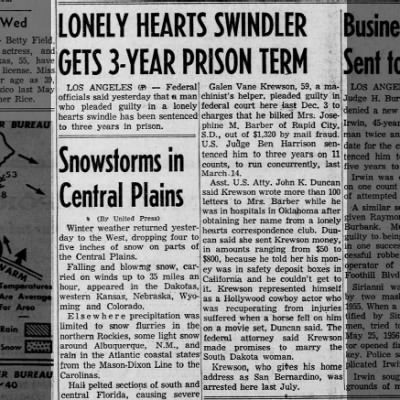
Fifty-nine in 1957 is a man born in 1897. "Hospitals in Oklahoma" — the state of Marvel's farm. "Promises to marry" — his tree has a fifth marriage, in Houston, on 29 November 1950, to a woman it does not name [8]. And Springfield, Missouri, which no one in the family could account for, has one institution that accounts for it, and the death certificate names it. Missouri State File No. 20741, filed 17 June 1957: place of death, Greene County, Springfield, "Medical Center for Federal Prisoners," length of stay thirty-four days; Galen Vane Krewson, white, male, divorced, born July 29, 1897, Cincinnati, Iowa, usual occupation "machine operator," industry "varied"; father's name "Unknown (deceased)," mother's maiden name "Unknown (deceased)" — the informant being "FILE: MCFP Springfield, Missouri," the prison's own record, which did not know Charles and Lottie; cause of death, inanition, due to carcinoma of the bladder with metastases, nineteen months — so he had been dying since the autumn of 1955, through the Oklahoma hospitals and the hundred letters; autopsy performed; certified by the Clinical Director; buried 10 June 1957 in St. Mary's Cemetery, Springfield, by a local funeral home, three days after he died at 1:55 in the morning [10]. Al was in Ireland; the letters his father had written him were in Grandpa Mitchell's safe.
The book has already said, in chapter 12, what else the tree and the gallery turned up about this man — that a Muscatine newspaper called him a wounded veteran of France at his first wedding in 1920 — a claim the death certificate, in a box filled in from a prison file, answers "No," so that the book carries it now as a newspaper's word and not a fact; that he married five times; that in the Portland and Chicago years he lived as "Bill Small," with a wife and two children who did not carry his name. None of it changes what happened in 1946, and none of it is what Al forgave him for, because Al never knew it. It is set down here because the book's rule, from the first chapter, is that the rifts are the subject and the documents decide — and because the man who wrote "I forgive him and hope to find him in the resurrection" would, the book thinks, have wanted the whole of what he was forgiving.
In 1969, out of the Army, he wrote the letter that found Bill Krewson in Indiana, and heard for the first time the other half of his father's story — the flight from Iowa, the dead brothers, the father who "was after my dad's blood." Bill and Earl and Aunt Anna gave him what Granny had not: a version in which his father had been running from something before he ran from them. He wrote it all down in 2005 and drew, at the end, the only conclusion the evidence allowed him:
I still say this … just like I told them … "If I could meet him today alive, I'd quickly give him a hug, assuring him I forgive him for all that happened to us and that I love him." … One very important thing is missing in all this … my dad's actual account of his story. He is unable to defend himself and I choose to not judge him or condemn him. I personally do not believe he ever intended to hurt us kids in any way, but he did. As for me, I forgive him and hope to find him in the resurrection. I will certainly be looking for him. I cannot speak for my siblings, nor will I. They have their own feelings about him, and they have every right to them.
Al Krewson to Michael, 21 January 2005 [1].The book has now told three centuries of this family's rifts from the documents: a will burned, a brother's lawsuit, a grape arbour, two dead sons in Iowa. This is the first one told by someone who was inside it, and he ended it the way none of the others were ended, by forgiving the man who caused it and saying so in writing. The family's genealogist, asked why the Krewsons never built up what other families did, said the rifts went back to the 1600s and "no one was talking about what they were." In 2005 one of them was. This chapter is what he said.
The ground it happened on
As always, what follows is the period's own description of the places, not a record of these people. Los Angeles in 1946 was a city that had grown by half a million in the war and had nowhere to put them; the veterans were coming home to a housing shortage so severe that families doubled up and children were taken in by neighbours as a matter of course, which is part of why a family named McDonald with a house on a hill could absorb four small Krewsons for a season [5]. Oklahoma in 1946 was oil and wheat, and a farm "not too far from Tulsa" with a Dutch-style windmill pumping water for stock — the steel-bladed American windmill on a tower, blades reaching nearly to the ground on the small models — and potato bugs in the garden and chickens in the yard is the ordinary farm of the Osage plain [5]. The train from Tulsa to Los Angeles in 1946 ran by the Rock Island or the Santa Fe through Texas and New Mexico and Arizona, two nights, with a dining car staffed by Black waiters — the men who, on every American railroad of the period, fed and teased the children of white passengers, and whom one of those children remembered sixty years later before he remembered his own aunt's name — and ended, as Al remembered, in the streets of downtown Los Angeles, where the Santa Fe's tracks ran at grade past the warehouses to the terminal [5]. The observation car with rounded windows was the streamliner's rear car, the last thing on the train, with a window across its back through which the rails did indeed appear to come out of nowhere.
- Al Krewson's two emails to Michael Krewson of 21 January 2005 (11:01 a.m. and 11:55 a.m., the second sent "by accident" before it was finished and then completed), cc. his siblings — the family archive's al-krewson-early-childhood-1-2005-01-21.htm and -2-, and the family record's story "The Year the Family Broke Apart." All quotations in this chapter are his words, with typing slips silently corrected and nothing else changed. He describes the account as "pieced together from several talks we had during my growing up years in Ireland," from Bill and Earl Krewson (who knew Galen in Iowa) and Aunt Anna, and from his own memory from the age of three; the reader should weigh it as that. Michael's decision of 3 August 2026, on the private record, was to keep it "plainly, hard parts included"; the book follows that, and follows Al's own refusal to detail the anger at home.
- Félice Mitchell — born in Belgium, French before English, the Cambridge and Oxford claims, the Ferdinand-and-Isabella legend, "a real globetrotter," her move to Málaga after Herbert's death: Al Krewson to Michael, 26 June 2002, great-grandpa-and-grandpas-history-uncle-al-2002-06-26.htm; the family record marks the royal descent and the degrees as family lore, undocumented.
- Margery Knight Marshall's birth: GRO Certified Copy of an Entry of Birth (Application No. 4934606-1, Certificate No. BXCF 844765, issued 11 June 2013), father Alfred George Marshall, research chemist, mother Félice Marshall formerly Knight, 62 Foxley Lane, Purley; the family record's card.
- Galen's earlier marriages and the cousins' view of him: Al's 21 January 2005 letters; see chapter 12. The four children: the family record's cards for Al (born 2 February 1943, self-reported), Galen Jr. (Glenn) (born 21 December 1943, Los Angeles County certificate), Marjorie and Rosie (no birth dates on record; the order of the four is not documented, and the book does not assume it). Galen's death in 1957: the record's card carries it as a probable match to "Gaylen V Krewson sr, 1897–1957" in a cousin's Ancestry tree, not a primary document. Grandpa Mitchell's death "in 1963 or early 64," the refused leave and the closed estate: Al's 26 June 2002 and 21 January 2005 letters. The photograph "Al K (age 14), Grandpa Marshall, Aunt Kay and Uncle Bill" (~1957): the family archive.
- Los Angeles's postwar housing shortage, Oklahoma farm windmills, Lancaster and the Antelope Valley in the 1940s, and the Tulsa–Los Angeles rail routes and dining-car staffing of the period: general histories; stated as period-general, not as a record of this journey. The streamliner observation car is described from the railroads' own equipment of the era.
- San Francisco Examiner, Tuesday 23 October 1973, p. 50, "A. Marshall, oil executive" — a photograph of the newspaper-archive page, sent to Michael 11 September 2026 and archived as alfred-george-marshall-obituary-sf-examiner-1973-10-23.jpg. The Rhodes Scholarship checked independently against the University of Otago Library's list "New Zealand Rhodes Scholars" (otago.ac.nz/library/exhibitions/rhodes_scholars/), 1911 entry. The family record's story "A. Marshall, Oil Executive."
- A relative's Ancestry-style tree of the Knight/Marshall/Krewson line, drawn in Spanish, sent to Michael 11 September 2026 (knight-lopez-calleja-krewson-family-tree-2026-09-11.png): Alfred George Marshall b. 11 Mar 1888 Dargaville, Kaipara, Northland, m. 1915 Windsor, Berkshire, d. 21 Oct 1973 Berkeley; Margery d. 12 Jul 1979 Los Angeles; Galen b. 29 Jul 1897 Iowa, m. 1 Jan 1942 Yuma, d. 7 Jun 1957 Missouri; "Margery Felice" b. abt 1944; "Rose Marie" b. abt 1946. A compilation, not a set of documents; every date from it is marked so on the record. See chapter 14 for the letter that came with it.
- Michael's own Ancestry.com tree, "Krewson Family Tree," exported as a GEDCOM 11 September 2026 (krewson-family-tree-ancestry-2026-09-11.ged): Alfred George Marshall's family note on Rose Caroline Huff and Katherine; Margery's 1928 arrival and 1930 census (Martinez, Contra Costa Co.), Honolulu arrival 21 Jan 1932, naturalization petition 1947 and naturalization 27 Feb 1948 (California, Federal Naturalization Records 1843–1999); Galen's five marriages and his death (Missouri, U.S., Death Certificates 1910–1971; Find a Grave, Springfield). The New Zealand clippings from the tree's gallery, all archived in the family record: "The Three Candidates for the Rhodes Scholarship" (S. C. Smith photo, 1910); "The War" (Port Chalmers, 1914, letter dated 14 August); "Successful Career in Petrol Research — Rhodes Scholar's Work — New Zealander Returns" (Press Association, Wellington, 14 Dec 1931); "Petrol Puzzles Solved by Researchers — Work of Mr. A. G. Marshall, Auckland Rhodes Scholar" (Auckland Star, December 1931); "Personal" (December 1931). Henry Tizard and Harry Ricardo's fuel-research collaboration with Shell in the 1920s is general history, stated as context for what the clippings say of Marshall's part in it. The family record's stories "The Tree Michael Built" and "An Old Contemptible, and the Octane Number."
- San Bernardino County Sun, spring 1957, "Lonely Hearts Swindler Gets 3-Year Prison Term" (AP, Los Angeles) — a Newspapers.com clipping from Michael's tree, archived as galen-v-krewson-lonely-hearts-swindler-san-bernardino-county-sun-1957.jpg; quoted in full. The United States Medical Center for Federal Prisoners, Springfield, Missouri (opened 1933): general reference; the identification of it as the place of death is the book's inference from the sentence, the dates and the town, and is marked so. The family record's story "Bill Small, Hollywood Cowboy."
- The Division of Health of Missouri, Standard Certificate of Death, State File No. 20741, Registration District 128, Registrar's No. 529, filed 17 June 1957 — a scan from the Missouri death certificates 1910–1971 on Ancestry, saved by Michael 11 September 2026 and archived as galen-vane-krewson-missouri-death-certificate-1957-06-07-state-file-20741.jpg. Every quoted field is from it, including box 15, "Was deceased ever in U.S. Armed Forces? — No," which the book weighs against the Muscatine Journal of 14 January 1920 in chapter 12; neither the certificate (informant: the institution's file) nor the wedding notice is a service record, and no Army file has been requested.
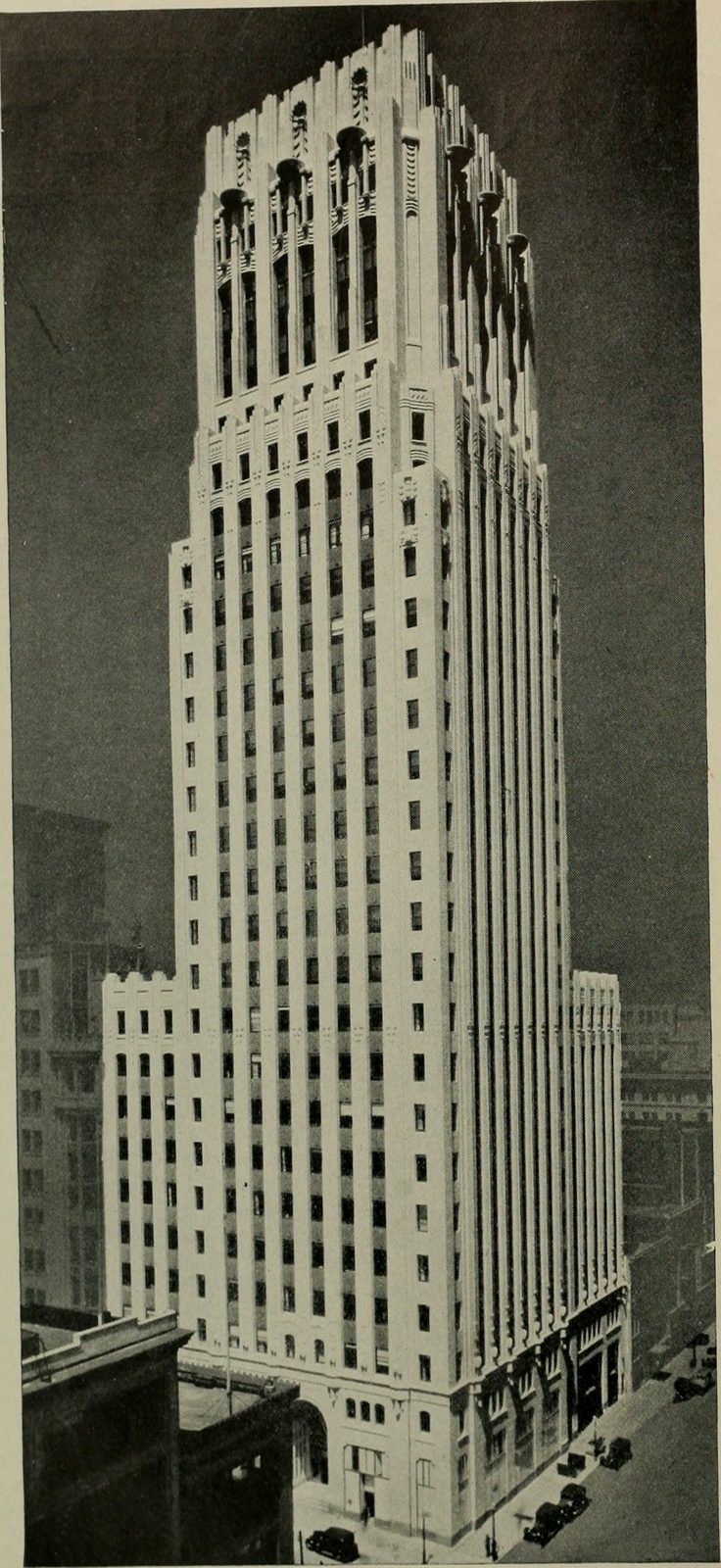
- The Royal Dutch/Shell Group was formed in February 1907 by the amalgamation of the Royal Dutch Petroleum Company of the Netherlands with the "Shell" Transport and Trading Company Ltd of London, on terms giving Royal Dutch a sixty per cent interest and Shell Transport forty; the two parents kept their separate legal existence and the group ran as a dual-listed partnership for most of the following century. The pecten emblem descends from the Shell partner's origins in the trade in ornamental shells. Standard corporate history, stated as background about Marshall's employer and not as a fact about Marshall. The Shell Building, 100 Bush Street, San Francisco (George W. Kelham, architect, 1929–30), was the group's San Francisco headquarters from its opening into the 1960s; no document in the family's hands places Alfred Marshall inside it, and the book does not claim one does.